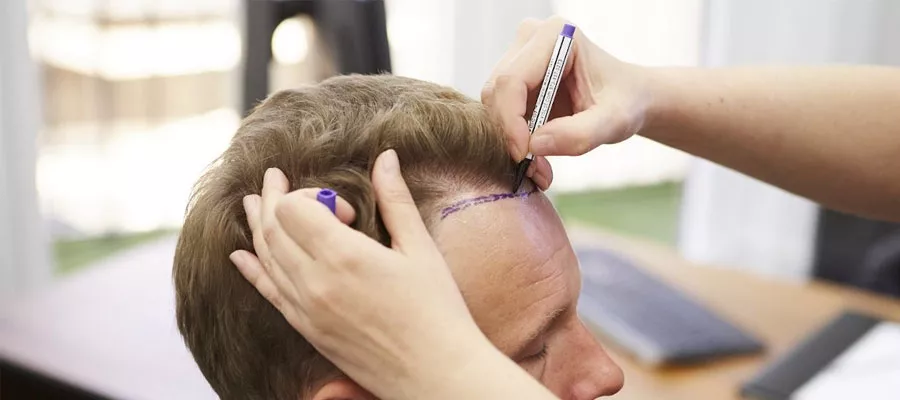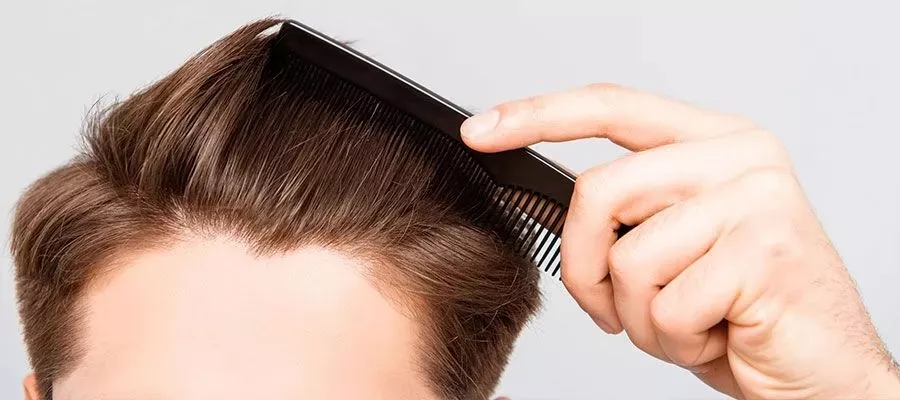

What is Manual FUE Hair Transplantation?
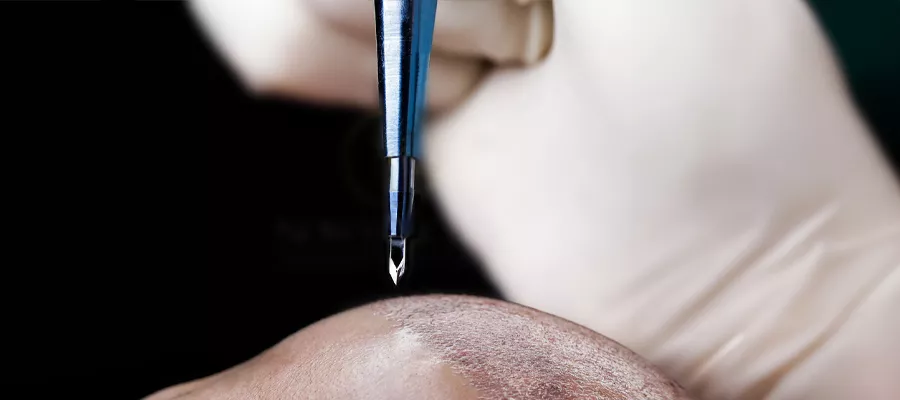
- Manual FUE hair transplantation is a hair transplantation method in which hair follicles are harvested using special micro-punch tips that are controlled entirely by hand, without the use of a motor.
- In this technique, grafts are taken one by one and slowly, thus reducing the risk of damage to the roots.
- It is especially preferred for people with fine, curly, or Afro-style hair.
- The exit angle of the grafts can be controlled more precisely.
- Less trauma and faster healing can be achieved in the donor area.
- When applied correctly, it produces natural and intense results.
How is Manual FUE Hair Transplantation Performed?
Manual FUE hair transplantation is performed by manually extracting hair follicles one by one using a micropunch and placing them at natural angles.
First, the donor area is numbed with local anesthesia. The physician carefully extracts the hair follicles using special micro-instruments. After the grafts are prepared, they are placed into channels opened in the recipient area according to the natural direction of hair growth. The procedure can take 6 to 10 hours, depending on the number of grafts. Although it takes longer, this method causes minimal damage to the tissue. The healing process is fast, and it offers the advantage of a natural appearance.
What does Manual FUE mean?
- Manual FUE means that hair follicles are harvested one by one using micro-punch tips controlled by hand, without the use of a motor.
- In this method, the surgeon manually removes each graft.
- This allows for more precise control of the root’s direction and depth.
- It is especially preferred for curly, fine, and Afro-style hair.
Who is it suitable for?
Manual FUE is suitable for individuals who desire a natural look, have sensitive skin, and require a limited number of grafts.
It provides effective results for individuals with fine hair or those who prioritize hairline aesthetics. It is also preferred in patients where minimizing the risk of tissue damage is necessary. The success rate is high in individuals with a strong donor area and good general health. Its low-trauma nature also makes it suitable for candidates who desire rapid recovery. The method provides high satisfaction, especially when performed by experienced physicians.
Who is it not suitable for?
Manual FUE is not suitable for individuals who need to transplant very large areas and require a high number of grafts.
Because this method progresses more slowly than motorized techniques, it is not preferred in cases requiring thousands of grafts. Achieving satisfactory results is also difficult in individuals with weak donor areas. The long operation time, requiring patience, may not be suitable for some patients. Furthermore, the procedure may be postponed if there are serious health problems, active skin diseases, or chronic conditions affecting healing. Manual FUE is suitable for situations requiring high precision. Suitability must be determined by expert evaluation.
What is the difference between manual FUE and micromotor FUE?
In manual FUE, grafts are harvested manually, while in micromotor FUE, grafts are extracted more quickly using motorized devices.
Manual FUE increases physician control and allows for more precise graft harvesting. Micromotor FUE, on the other hand, enables procedures to be performed on larger areas in a shorter time. In the manual method, less pressure is applied to the tissue, which can accelerate healing. Micromotor FUE shortens the procedure time but may offer more limited control compared to the manual method. While manual FUE focuses on aesthetic details, micromotor FUE offers the advantage of practicality. The choice should be made according to the area of hair loss and the desired outcome.
Advantages and Disadvantages of Manual FUE
Manual FUE offers the advantage of a natural look, but the long procedure time is a significant disadvantage.
The biggest advantage is that hair follicles can be harvested more controllably and precisely. This allows for a more natural planning of hair direction and density. Since the damage to the tissue is minimal, the healing process is usually quick. However, the procedure requires high dexterity and is time-consuming. This can be challenging for the patient in terms of time. It is also not preferred for high graft numbers. When performed by an experienced specialist, the advantages become significantly more apparent.
How does the manual FUE hair transplant process proceed?
- The area of hair loss and the donor area are analyzed in detail.
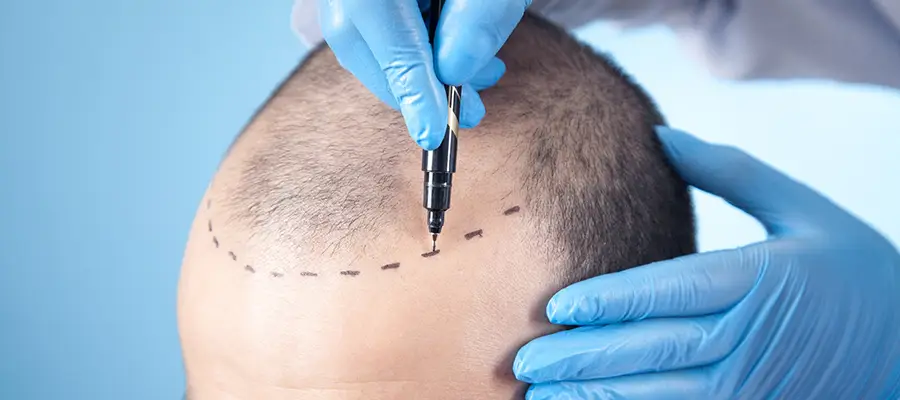
- Hairline and transplant plans are determined on an individual basis.
- The donor area is numbed with local anesthesia.
- Hair follicles are manually extracted one by one using micro-punch tips.
- The harvested grafts are counted and separated according to their quality.
- Channels are dug in the planting area to follow the natural direction of growth.
- Grafts are placed with control over angle, direction, and depth.
- Post-treatment care and washing instructions are explained in detail.
How long does a manual FUE hair transplant take?
Manual FUE hair transplantation typically takes between 6 and 10 hours, depending on the number of grafts.
The procedure time is longer compared to micromotor methods because hair follicles are extracted one by one using manual techniques. An average procedure involving 2,000 grafts can take a full day. As the number of grafts increases, the session time lengthens, and in some cases, it may be divided into two days. However, this process ensures that the hair follicles are harvested without damage and contributes to more natural results. The duration is determined according to the individual’s needs and the doctor’s work pace.
What factors determine the daily graft limit in manual FUE?
In manual FUE, the daily graft limit varies depending on the quality of the donor area and the surgeon’s skill.
Generally, between 1,000 and 2,500 grafts can be harvested. This number depends on factors such as the individual’s hair structure, hair density, and scalp elasticity. The surgeon’s experience and working time also affect the graft limit. Because grafts are harvested individually using manual techniques, fewer grafts may be collected compared to motorized methods. However, this allows for healthier and more controlled graft harvesting. Planning should be tailored to each individual.
Does manual FUE hurt?
Since manual FUE hair transplantation is performed under local anesthesia, no pain is felt during the procedure.
Before the procedure, the donor and recipient areas are numbed with local anesthesia. This means the patient only feels slight discomfort during the needle insertion. Pain is not felt during the implantation process; only pressure and a slight pulling sensation may be perceived. After the procedure, there may be mild stinging or tightness, but this is controlled with simple painkillers. Because manual FUE applies less pressure to the tissues, the recovery process is generally more comfortable.
Recovery After Manual FUE: Crusting and Redness
Crusting and redness after manual FUE usually decrease and completely disappear within the first 7-10 days.
Although the healing process varies from person to person, slight crusting will occur in the hair transplant area during the first week. These crusts will fall off on their own by the 10th day. Redness may last a little longer, especially in individuals with fair skin, but this is usually temporary. Gentle washing and regular use of the care products recommended by your doctor will speed up healing. It is important not to pick at the crusts and to protect the area.
Is manual FUE permanent?
Manual FUE hair transplantation is permanent because the transplanted grafts are taken from an area resistant to hair loss and will last a lifetime.
Hair follicles harvested using this method are resistant to genetic hair loss, providing lasting results. Shock shedding may occur in the first few months; this is part of the natural growth cycle. New hair begins to grow from 3-4 months onwards, and full results are achieved within 8-12 months. With proper planning and expert application, the results are long-lasting and natural. If existing hair loss continues, the process can be supported with additional treatments.
Risks and Side Effects of Manual FUE
Manual FUE hair transplantation is a low-risk procedure, but side effects such as infection, redness, and crusting can occur.
Mild crusting and tenderness are normal in the first few days after the procedure. Without proper care, the risk of infection may increase, or complications such as graft failure may occur. Temporary side effects such as edema, swelling, or folliculitis may also occur. Smoking and alcohol consumption can negatively affect healing. These side effects are generally short-lived and can be managed with a doctor’s guidance. Expert application in a sterile environment minimizes risks.
Is it possible to combine manual FUE with DHI?
Yes, combining manual FUE and DHI techniques can yield effective results in both large areas and densely populated regions.
In this approach, grafts manually harvested from the donor area can be more precisely placed into the required areas using the DHI method. This ensures both natural density in sensitive areas and more efficient coverage of larger areas. The combination offers an advantage in situations requiring detailed planning, such as hairline and sideburns. By combining the strengths of both techniques, a natural and dense appearance is achieved. The application plan is determined individually by a specialist.
Manual FUE Hair Transplant Prices 2026
In 2026, the prices for manual FUE hair transplantation generally range between 3,000 £ and 12,000 £
What should the punch diameter be in mm when used in manual FUE?
In manual FUE, the punch diameter is usually selected between 0.6 mm and 0.9 mm, and is determined according to the hair structure.
The punch diameter is chosen according to the thickness of the hair strand, the root structure of the graft, and the desired amount of scarring. Smaller diameters are preferred for fine hair, while larger punches may be needed for curly or thick hair. If the diameter is not chosen correctly, the grafts may be damaged or scarring may occur in the donor area. Therefore, individual planning should be done for each patient. The appropriate diameter plays a critical role in graft health and natural results.
Does the sharpness and disposable nature of the manual punch affect the results?
Yes, the sharpness of the punch and the fact that it’s disposable directly affect graft quality and the healing process.
A sharp punch ensures that the graft is removed without damaging the surrounding tissues. This both protects the health of the graft and shortens the healing time. Disposable instruments guarantee sterile work and reduce the risk of infection. It is important that the punch is undamaged and sterile to minimize scarring in the donor area. Using a poor-quality or blunt punch can increase the risk of graft loss and complications.
Is Manual FUE More Advantageous for Curly/Thick Hair?
Yes, for curly and thick hair, manual FUE can be advantageous because the graft direction is better controlled.
Because hair follicles in these hair structures are often curved, they are difficult to extract with motorized devices, and the risk of graft damage is high. Manual FUE allows for safer extraction by expertly following the direction of the root. This reduces graft loss and increases the survival rate. This advantage is particularly noticeable in Afro hair types. Manual technique is preferred for root preservation, natural results, and faster healing.
Does the risk of graft damage increase with manual FUE in very fine hair?
Yes, in very fine hair, the grafts are more delicate, so the risk of damage can increase with manual FUE.
Fine hair strands and roots are more easily damaged during extraction. Therefore, a smaller, sharper punch should be preferred. The experience of the specialist performing the procedure is also crucial. With the correct technique, the risk of damage to the extracted grafts can be reduced. However, compared to motorized systems, manual FUE offers safer control for delicate structures. Planning and technique must be applied carefully.
How to Reduce the Risk of Overharvesting with Manual FUE in Patients with Weak Nuchal Transplantation?
In patients with poor donors, manual FUE can reduce the risk of overharvesting because grafts are harvested in a controlled manner.
The use of a manual punch allows the doctor to instantly visually assess the density of graft harvesting. This facilitates homogeneous harvesting. Sparse donor areas are not overloaded, and hair density is preserved. Furthermore, the number of grafts harvested is limited, and the harvesting areas are carefully distributed. This preserves the aesthetics of the donor area and prevents unnecessary tissue damage. With an experienced specialist, manual FUE offers effective results with low risk.
How is graft out-of-body time managed in manual FUE?
In manual FUE, the time grafts remain outside the body is managed by storing them in special solutions and shortening the duration of rapid implantation.
First, immediately after the grafts are extracted, they are placed in cold, sterile solutions. This environment preserves cell viability and delays oxygen loss. To prevent grafts from remaining outside for extended periods, graft harvesting and placement procedures are performed in parallel. If necessary, the procedure is divided into shorter sessions. With careful planning and team coordination, graft loss can be minimized. This is fundamental to lasting and healthy results.
What can be done to preserve graft viability in long-term operations?
In lengthy operations, graft viability is preserved using special solutions, a cold chain, and rapid transfer.
Each graft is immediately placed in a suitable liquid solution after extraction. Storage in a cold environment slows down cellular metabolism, extending graft life. If the procedure time is prolonged, graft harvesting and implantation stages can be planned alternately. It is also important not to hold the grafts too tightly with tweezers. The root portion of the graft should be transported without damage, and the waiting time should not exceed 4-6 hours. These methods reduce graft loss and increase the success rate.